Goals & Vision
LAOS is the first Layer 1 blockchain connected to Ethereum, Polygon, BSC, Base, L2s in general, and any EVM-compatible chains without bridges, aiming to become the protocol used by major ecosystems to offload more than 20% of all transactions, eliminating the need for insecure bridges or wrapped currencies.
Offloading through LAOS' Bridgeless Pattern is a novel process where gas fees for certain types of transactions are paid within the LAOS consensus system, while the created assets remain on the blockchain of choice, ensuring they are accessible where liquidity resides. Using this pattern, games and Real World Assets applications can scale without forcing users to migrate away from main ecosystems, use bridges, or wrap currencies.
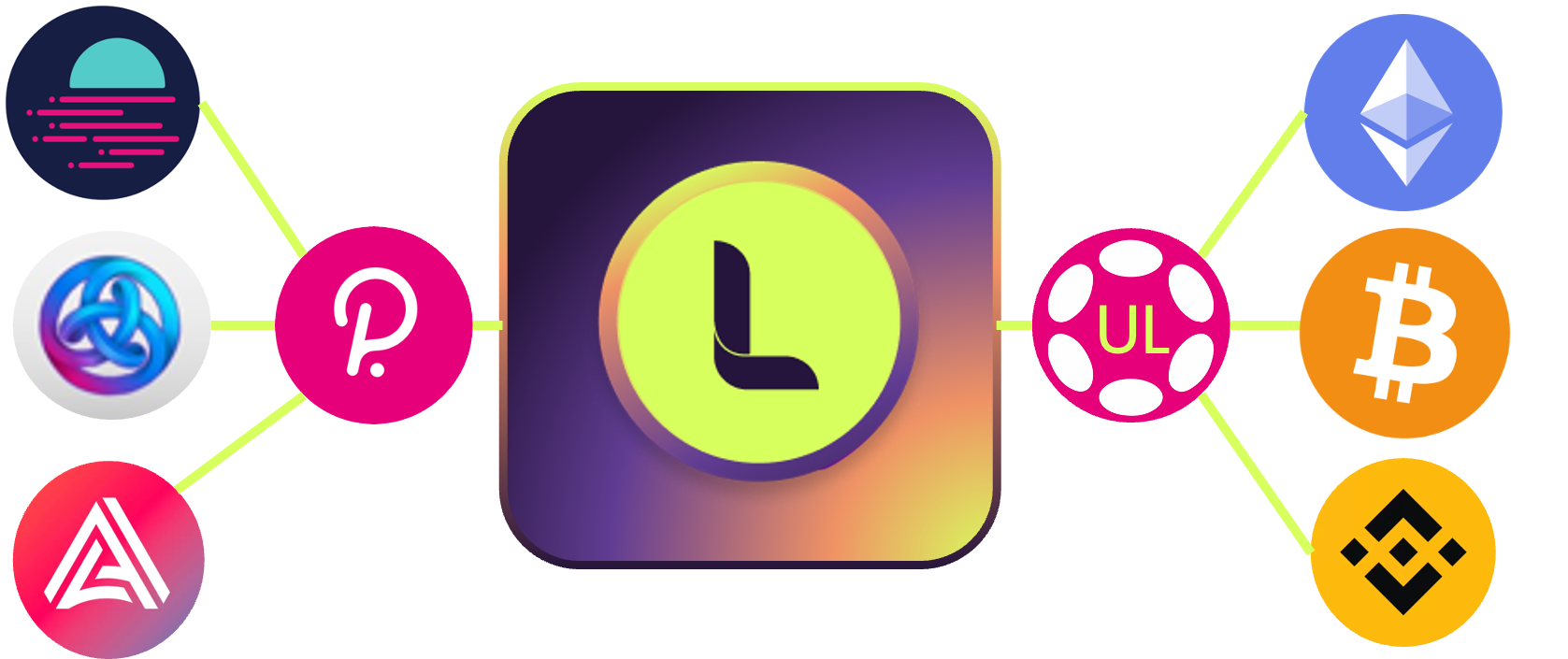
In other words, LAOS enables the heavily underutilized bandwidth of Polkadot to be leveraged for scaling highly congested blockchains, without the need for bridges.
Bridgeless and Security
Since LAOS is used to scale other blockchains, it is natural to compare it to current Layer-2 (L2) solutions, such as those operating on Ethereum. The latter pay a severe price in security and centralization due to their reliance on bridges.
Check the excellent work by L2Beat in monitoring these trade-offs, and you’ll find—across all major L2s—one or more of the following issues: "Only a handful of whitelisted actors can submit transactions.", "User withdrawals can be censored by the permissioned operators", "There is no way to verify the system", "Proof construction relies fully on data that is NOT published on-chain", "Data depends on a Data Availability Committee with a threshold of 5/7."
In sharp constrast, with Bridgeless Minting, no bridge needs to be maintained. No extra trust assumptions are required. No separate infrastructure is needed. DApps only need access to both consensus systems (e.g., Ethereum and LAOS), without relying on anyone to maintain additional off-chain components.
Since bridges are eliminated, one key question remains for users and developers wanting to scale Ethereum: How secure is LAOS itself?. This is where Polkadot plays a crucial role. As a Parachain on Polkadot, LAOS inherits all the security guarantees of the Polkadot network. On the one hand, every single transaction processed on LAOS is verified by Polkadot's relay chain validators. Including a malicious transaction on LAOS would require hacking one of the most secure blockchains, rivaled only by Bitcoin and Ethereum.
On the other hand, Data Availability is enforced by Polkadot’s architecture, meaning data is available by construction and can be fetched permissionlessly, for example, by anyone running a permissionless node.
Bridgeless and User Experience
For users, no bridges means a seamless experience, a major improvement over onboarding onto an L2: all assets minted via Bridgeless Minting are immediately available on the chosen chain.
For example, when scaling Ethereum, minted assets can appear in MetaMask like any other ERC721 token, can be traded on OpenSea, and can be used in Ethereum’s DeFi ecosystem (e.g., lending, staking).
Users don’t need to learn about wrapped currencies or deal with sites offering bridging currencies. They don’t even need to know that LAOS was involved in the minting process.
For developers, LAOS is fully EVM-compatible, meaning they can keep using familiar tools like Hardhat, MetaMask, and Web3 libraries without learning new frameworks.